

Where the moisture shows up tells you what has failed, and the part of the job you never see decides whether the wall stays dry.
Fog on a window in October is a finding. It tells you something about the glass, the frame or the air inside your house. Which one depends on where the fog sits.
Most Calgary homeowners wait until the first hard cold snap to look closely. By then the sealants will not cure well, the days are short and every contractor is booked. A fall inspection gives you time to read the symptoms, sort out what is really wrong and decide whether you need new windows or just a change in habits. This is how a foreman reads a window, and what you should know before anyone removes one from your wall.
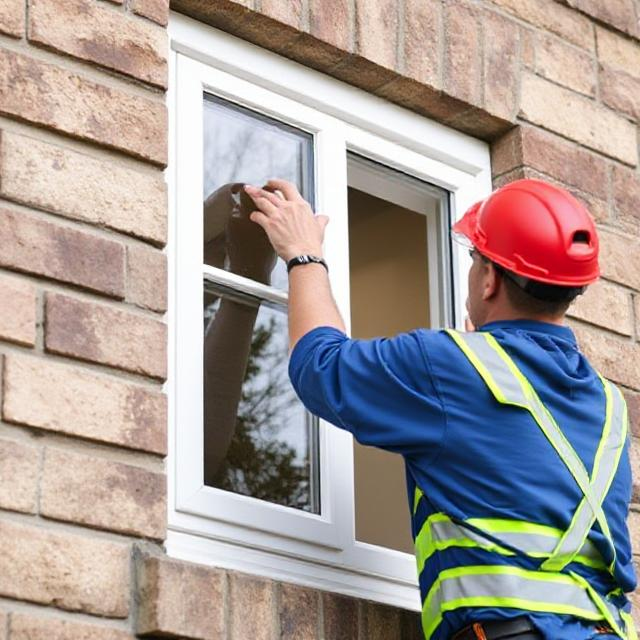
Where the moisture sits tells you what failed
Start with a simple test. On a cold morning, find the fog and touch it. Then wipe it.
If the moisture is on the room side of the glass, it wipes off with your finger. That is condensation from indoor air meeting a cold surface. The window is doing what cold glass does. The cause is usually indoor humidity, not a defect.
If the fog is trapped between the two panes, you cannot wipe it off. That is a failed seal. The window is a sealed glass unit with a spacer around the edge, and the seal has let moist air in. It will not dry out for good. It comes back every cold morning.
If the moisture is on the outside face of the glass, that is normal on a clear, cool night. It is a sign the glass is insulating well.
What a failed seal actually means
A sealed unit holds dry air or gas between the panes. Over the years, Calgary’s swing between a hot July sun and a minus thirty January punishes that edge seal. The glass expands and contracts. The seal fatigues. Eventually it lets air through.
Once moist air gets in, the insulating value drops. You will feel it as a cold draft near the glass and see it as stains or a haze you cannot clean.
A failed seal alone does not always mean the whole window is finished. If the frame is sound and the sash still closes tight, a glass unit can sometimes be replaced inside the existing frame. If the frame is tired too, you are better off replacing the whole window.
Rotted frames and sills are the louder warning
Press a screwdriver tip into the bottom corners of a wood frame and the sill. Sound wood pushes back. Rotted wood gives, crumbles or feels like damp cardboard.
Look for paint that bubbles or peels along the lower edges. Look for dark stains on the drywall under the window. Look for a sill that has gone soft or swollen.
These are signs that water has been getting in for a while. The window may only be the place you can see it. Behind the frame, the sheathing and the framing members may be wet too.
That changes the job. A rotted frame means you open up the opening, check what is behind it and fix that first. Pushing a new window into a wet opening just hides the problem for a few winters.
What new windows fix, and what they do not
New windows fix real things. A failed seal goes away. A warped sash that will not lock now locks. A frame that leaks air at the corners stops leaking. You will feel the difference in a draft and hear it in the quiet.
They do not fix indoor humidity. This is where homeowners get disappointed.
If your house holds a lot of moisture, new windows can still fog on the inside. Better windows are tighter, so the air has fewer places to escape. Humidity can actually climb. The fog just moves to the coldest surface it can find.
-
Run bathroom and kitchen fans during and after use, and let them finish.
-
Check that your dryer vents outside and the duct is not crushed or loose.
-
Watch for drying laundry, large houseplant collections and unvented humidifiers.
-
Open the blinds. Closed blinds trap cold air against the glass and encourage fog.
If the fog stays on the room side after you have sorted these out, then it is worth having someone look at the window itself.
The flashing detail decides whether the wall stays dry
Here is the part you never see once the job is done. Flashing is the thin waterproof material, usually a membrane or metal, that directs water around the opening and out onto the face of the wall. Without it, water that gets past the siding or stucco has nowhere to go but into the wall.
A window is a hole in the wall. Every edge of that hole needs to shed water outward. The sill needs a slope and a pan so water drains out, not in. The sides need membrane lapped so the upper layer covers the lower one, like shingles. The head, the top edge, needs a cap that kicks water away from the frame.
Order matters. The membrane at the bottom goes on first. The top goes on last, over the side pieces. If a crew gets that sequence backward, water runs behind the layers instead of over them.
This is why two quotes for the same window can look so different. One includes proper flashing and the other does not. The windows look identical on the day. They do not look identical five winters later.
The gap around the frame
Every window sits in an opening slightly larger than the frame. That gap has to be filled, and it has to be filled with the right material.
Insulating foam or mineral wool goes in to stop heat loss. An air seal goes on the room side to stop warm, moist air from reaching cold framing. A weather seal goes on the outside to keep rain out.
Skip the room-side seal and warm air leaks into the wall in January. It condenses on the cold sheathing and rots the framing from the inside. You never see it until the stain shows up on the trim.
Why fall is the right time
Windows installed in cold weather are harder to do well. Sealants and foam have temperature limits. Some will not cure properly below a certain cold. Exterior work in a hard freeze means a crew rushing against short daylight.
A fall install means the house is sealed up before the first real cold. It also means you do not spend December with a hole in your wall under a sheet of plastic.
There is a second reason. The wall around an old window often needs attention. Stucco cracks, siding gaps and failed caulking all show up when the window comes out. In fall, you have a chance to repair these before freeze-thaw cycles get into them.
Chinook winters are hard on this. A warm day thaws the water sitting in a gap. The cold night freezes it. The gap widens a little each time.
Questions to ask before you sign
A good contractor will answer these without fuss. If you get vague replies, that tells you something too.
-
Will the old window come out down to the rough opening so you can see the framing and sheathing?
-
What flashing and membrane goes at the sill, the sides and the head?
-
How is the gap between the frame and the opening insulated and air-sealed?
-
How will the new window tie into the siding or stucco around it?
-
What happens if you find rot once the old window is out?
-
Who handles the interior trim and the exterior finishing, so nothing is left bare?
Keep the answers in writing. They are the difference between a window that is installed and a window that is installed correctly.
Read the window before you replace it
Fog between panes means a failed seal. Fog on the room side usually means humidity. Soft wood means water has been getting in for a while. Each one points to a different fix, and only some of them need a new window.
If your windows are due, look at the window replacement in Calgary options early in the fall, while there is still room in the schedule and weather to do the work properly.
Do the walk-around now. Press the sills, wipe the fog and look at the paint. It takes ten minutes and it tells you what to do before the cold shows up.
About the author: this article was contributed by the team at JM Contracting, a fully insured and bonded exterior contractor serving Calgary since 1999. Our crews handle windows, siding, stucco, soffit and fascia, eavestrough and the rest of the building envelope.