

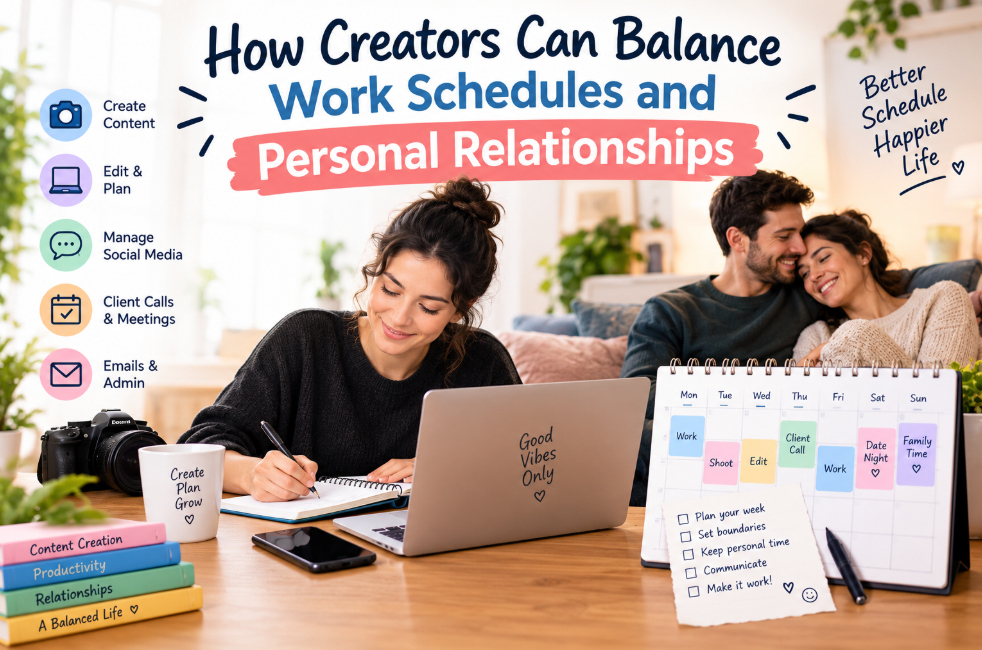
Creators often work around uneven hours. A brand may send feedback late in the day. A video might take longer to edit than expected. Livestreams, shoots, client calls, comment moderation, and admin tasks can land at awkward times. That flexibility can help with creative work, though it can also make personal plans harder to pin down. Friends and partners usually need something more concrete than “I should be free sometime after I finish this edit.” A workable routine starts with knowing when work actually happens.
Know what your week looks like
Creative work tends to expand when it has no clear boundary. A two-hour editing job becomes four hours. A quick inbox check turns into twenty replies. A short content session becomes an evening of captions, thumbnails, and “one last adjustment.” Creators with another job on top of that have even less room for guesswork.
People who work rotating shifts often benefit from mapping those hours first. A 2-2-3 schedule is one example of a repeating shift pattern that groups working days and days off in a predictable cycle. Once those workdays are visible, creators can plan filming, editing, social events, and time with a partner around them. The same idea applies to freelancers and full-time creators. Put fixed commitments into a calendar before adding flexible work. That includes meetings, appointments, travel time, family obligations, and anything else that already owns part of the day.
A blank calendar can create false confidence. Tuesday may look completely open until you remember the dentist at 11, a grocery run, two hours of filming, and the fact that dinner apparently still needs to happen.
Give creative work an end time
Creators often plan when they will start working. Fewer people decide when they will stop. An end time helps protect personal plans from work that keeps drifting later. If you plan to edit from 2 p.m. to 5 p.m., treat 5 p.m. as part of the plan. You can move unfinished work to another block instead of quietly borrowing the evening.
This approach works best when you give yourself enough time in the first place. Packing six hours of work into a three-hour slot creates a scheduling problem before the day begins. Keep some buffer around tasks that regularly run long. Filming is a common example. So are photo shoots, live sessions, client revisions, and anything involving several people. A thirty-minute gap can absorb a delay without knocking over everything that comes after it.
Tell people what your schedule actually looks like
Relationships become easier to coordinate when both people know the rough shape of the week. Creators sometimes have schedules that look strange from the outside. You may work on Sunday morning and take Wednesday afternoon off. You may spend three quiet hours answering comments and emails even though nobody can see you “working.” You may have a launch week that takes over most evenings.
Explain those patterns plainly. You do not need to turn your calendar into a presentation. A simple heads-up usually works: “I have a shoot Thursday evening, but Friday after six is clear.” That gives the other person something useful to work with.
Shared calendars can help couples who have busy schedules, especially when both people work irregular hours. They reduce the small back-and-forth questions about who is free and when.
Keep some personal plans on the calendar too
Work usually gets scheduled because deadlines force it to. Personal time can disappear because it feels more flexible. Put important plans into the calendar with the same level of detail you would use for a client call. That can mean dinner with a partner, a family event, a birthday, a weekend away, or a quiet evening at home. The point is visibility. Once something has a place on the calendar, you can see how much time remains around it.
This also helps creators avoid stacking work on top of every free evening. A personal plan does not need to become a productivity task. “Dinner, 7 p.m.” is enough. Nobody needs a color-coded workflow for pasta.
Use small gestures when schedules get crowded
Busy periods happen. Launches, holidays, travel, seasonal campaigns, and client deadlines can all compress a week. Small gestures become useful during those stretches because they take little time and still show that you remembered the person.
A quick voice note can work. So can a message sent before a long workday, a photo from your afternoon, or a short digital card for a holiday. For example, someone who cannot celebrate Thanksgiving in person can send a personalized thanksgiving day wish online. It gives the message a little more structure than a plain text while keeping the effort manageable during a busy day.
The same principle applies throughout the year. A thoughtful message works because it reflects attention to the person and the occasion. Length matters less than relevance.
Separate “available” from “free”
Creators often have blocks of time that look open while still carrying work pressure. You may technically have no meeting from 6 p.m. to 9 p.m., yet a sponsored post still needs approval by morning. That evening is available on paper and already occupied in practice.
Use your calendar to mark work that has a deadline even when it has no meeting attached to it. Editing, writing, research, invoicing, and preparing content all take real time. This gives you a more accurate view of your week. It also makes it easier to say yes to plans with confidence. If Thursday evening is genuinely clear, you know it rather than hoping your workload behaves.
Plan around energy as well as hours
Two free hours after a long shoot may not feel like two free hours on a quiet afternoon. Creative work can drain attention even when it does not involve physical effort. Recording several videos, handling comments, negotiating with brands, and making constant small decisions can leave little patience for an elaborate evening plan.
Schedule demanding work with that in mind. A creator who finishes a full filming day at 7 p.m. may prefer a relaxed dinner at home. A free Sunday afternoon may suit a longer date or social event. This kind of planning makes personal time easier to enjoy because the plan fits the day that came before it.
Keep work communication under control
Notifications can blur the line between work time and personal time faster than almost anything else. Creators receive messages through email, social platforms, messaging apps, management tools, and sometimes all of them within the same ten-minute window.
Set a few periods for checking work messages instead of reacting every time something appears. The exact schedule depends on your work. Some creators need to respond quickly during campaigns or launches. Others can check messages two or three times a day. The goal is predictability.
If you know you will check email again at 8 p.m., you can leave it alone during dinner at 7.
Review the week before it fills up
A short weekly review can prevent a lot of last-minute reshuffling. Check fixed work commitments first. Add filming, editing, and admin time. Look at social plans and relationship commitments. Then leave a few open spaces for delays or work that moves.
You can also spot overloaded days early. Three meetings, a filming session, editing, and dinner plans may technically fit into one day. The timetable may still feel ridiculous once travel, setup, meals, and basic human maintenance enter the picture. Move something while you still have options.
Keep the system simple enough to use
Creators already deal with enough platforms. A planning system should reduce the amount of information you need to hold in your head. One calendar, a short task list, and a reliable way to track changing shifts may cover most needs. The system only works if you check it.
Choose a setup you can maintain during normal weeks and busy ones. Review it regularly, update it when plans change, and keep both work and personal commitments visible.
Balance usually comes from a series of small scheduling decisions. Know your working hours. Give tasks realistic boundaries. Tell people when you are free. Put personal plans on the calendar before work quietly claims the space.
Creative work will still run late sometimes. Plans will move. A calendar cannot negotiate with an unexpected revision request at 10 p.m., which is probably for the best.
A clear schedule does give you enough information to make better decisions about your time, and that leaves more room for the people who share it with you.